LinkedIn marketing in 2026 has become something nobody really saw coming — and honestly, it’s the most exciting platform shift I’ve watched ha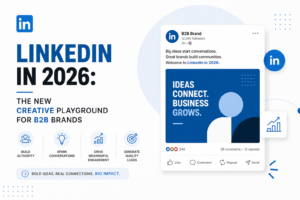 ppen in years.
I’ll be real with you. Two years ago, if a client asked me to focus on LinkedIn as a creative content channel, I’d have smiled politely and quietly steered them toward Instagram. LinkedIn felt stiff. Corporate. The kind of place where people posted motivational quotes with stock photos of sunrises and called it “thought leadership.”
But something shifted. And now? LinkedIn is where some of the most genuinely creative, high-performing B2B content is happening. The brands that figured this out early are reaping serious rewards — and the ones still treating LinkedIn like a digital CV are getting left behind.
Let me walk you through what’s actually changed, and more importantly, how to use it.
Why LinkedIn Marketing 2026 Looks Nothing Like Before
The LinkedIn algorithm has gone through a significant evolution. It used to heavily reward connection-bait posts — those “I’m humbled to announce” updates that got a thousand likes because your entire network felt obligated to engage. Those still exist, but they’re not what’s getting reach anymore.
What the algorithm rewards in 2026 is dwell time and genuine engagement. Posts that make people stop, read, think, and respond. Content that sparks actual conversation rather than a drive-by like. And critically — content that looks worth stopping for.
This is where LinkedIn marketing 2026 gets interesting for designers and social media managers. Because now, visual quality on LinkedIn actually matters. The platform has been quietly building its visual infrastructure — better image rendering, native document carousels, video with auto-captions, and a creative tools suite that didn’t exist three years ago.
The result is a platform that rewards creativity in a way it never used to. And for B2B brands, that’s an enormous opportunity.
What LinkedIn B2B Strategy Actually Looks Like in 2026
Here’s where I see most B2B brands still getting it wrong: they treat LinkedIn like a press release channel. New hire announcements. Award wins. Product launches written in corporate-speak. Content that screams “we made this for our board, not for you.”
Effective LinkedIn B2B strategy in 2026 looks completely different. It looks like content that educates, entertains, or genuinely provokes thought — delivered with visual design that earns attention before the first word is read.
The brands crushing it on LinkedIn right now are doing a few specific things:
They’re leading with perspective, not promotion. Instead of “We’re excited to launch our new product,” they’re opening with “Here’s the uncomfortable truth about why most [industry] strategies fail.” One is a press release. The other is content people actually want to read.
They’re treating their LinkedIn feed like a creative portfolio. Consistent visual identity, branded templates, a color system that makes their content instantly recognizable in a sea of generic posts.
And they’re using their people. Employee content — real humans sharing genuine perspectives — consistently outperforms brand-page content on LinkedIn. In 2026, the smartest brands aren’t just posting from their company page. They’re empowering their team members to become visible voices in their industry.
LinkedIn Visual Content: Why Design Finally Matters Here
This is the part I get most excited about as a graphic designer.
LinkedIn visual content used to be an afterthought. A square image slapped on a post, usually a quote graphic or an event banner. Nobody was thinking about LinkedIn when they were planning their visual content strategy.
That’s completely changed. Here’s what’s working visually on LinkedIn in 2026:
Carousels Are Still King
Document carousels — those swipeable PDF-style posts — remain the highest-engagement format on LinkedIn by a significant margin. People love them because they deliver value in a digestible, scroll-friendly format. As a designer, they’re also one of the most satisfying things to create.
The key to a carousel that performs: treat slide one like a magazine cover. Bold headline, strong visual, immediate value signal. If slide one doesn’t earn the swipe, the rest doesn’t matter.
Design-wise, I keep carousels to a clean two-color system, consistent typography, and a strong grid. They should feel like a mini brand experience — not a PowerPoint from 2015.
Native Video with Intentional Design
Video on LinkedIn has exploded. But not just any video — specifically, videos that are clearly designed for the platform. Vertical format, bold captions, clean motion graphics, and a strong hook in the first three seconds.
The mistake most brands make with LinkedIn video is repurposing their TikTok or Instagram Reels content directly. The audience, the tone, and the context are completely different. LinkedIn viewers are in a professional headspace. They want content that respects that — even if it’s creative and visually engaging.
Branded Text Posts That Actually Look Good
Even plain text posts on LinkedIn benefit from visual thinking. The structure of the copy — short punchy opening line, white space, clear formatting — is itself a design decision. The best-performing text posts on LinkedIn in 2026 are written like they were designed, even without a single image.
LinkedIn for Brands: The Content Mix That Works
Through managing LinkedIn for multiple B2B clients, I’ve landed on a content mix that consistently delivers results:
40% Educational content — tips, frameworks, industry insights, how-tos. This builds authority and gets saved and shared.
30% Perspective content — opinions, takes, commentary on industry trends. This drives comments and genuine conversation.
20% Social proof content — case studies, client results, behind-the-scenes work. This converts interested followers into enquiries.
10% Promotional content — actual product or service promotion. Yes, just 10%. LinkedIn audiences disengage fast from brands that sell too hard, too often.
This mix applies to B2B social media marketing across most industries — though the exact ratios shift depending on your audience and goals.
The Creative Opportunity Nobody Is Taking
Here’s what genuinely surprises me about LinkedIn in 2026: despite all the platform improvements and the clear evidence that creative content performs better, the majority of B2B brands are still playing it safe.
They’re posting the same safe content, in the same safe formats, with the same safe visual design. And getting safe, unremarkable results.
The creative bar on LinkedIn is still surprisingly low compared to Instagram or TikTok. Which means right now — in 2026 — there is a genuine first-mover advantage for B2B brands willing to invest in creative LinkedIn visual content and a real content strategy.
The brands that move now will own the visual and creative space on LinkedIn before everyone else catches up. And once you own that space, it’s very hard for competitors to take it from you.
Final Thoughts
LinkedIn marketing 2026 isn’t about gaming an algorithm or finding a posting hack. It’s about showing up with genuine creative investment on a platform that is finally ready to reward it.
If you’re a B2B brand still treating LinkedIn like a corporate noticeboard — it’s time to rethink that. The playground is open. The question is whether you’re going to play.